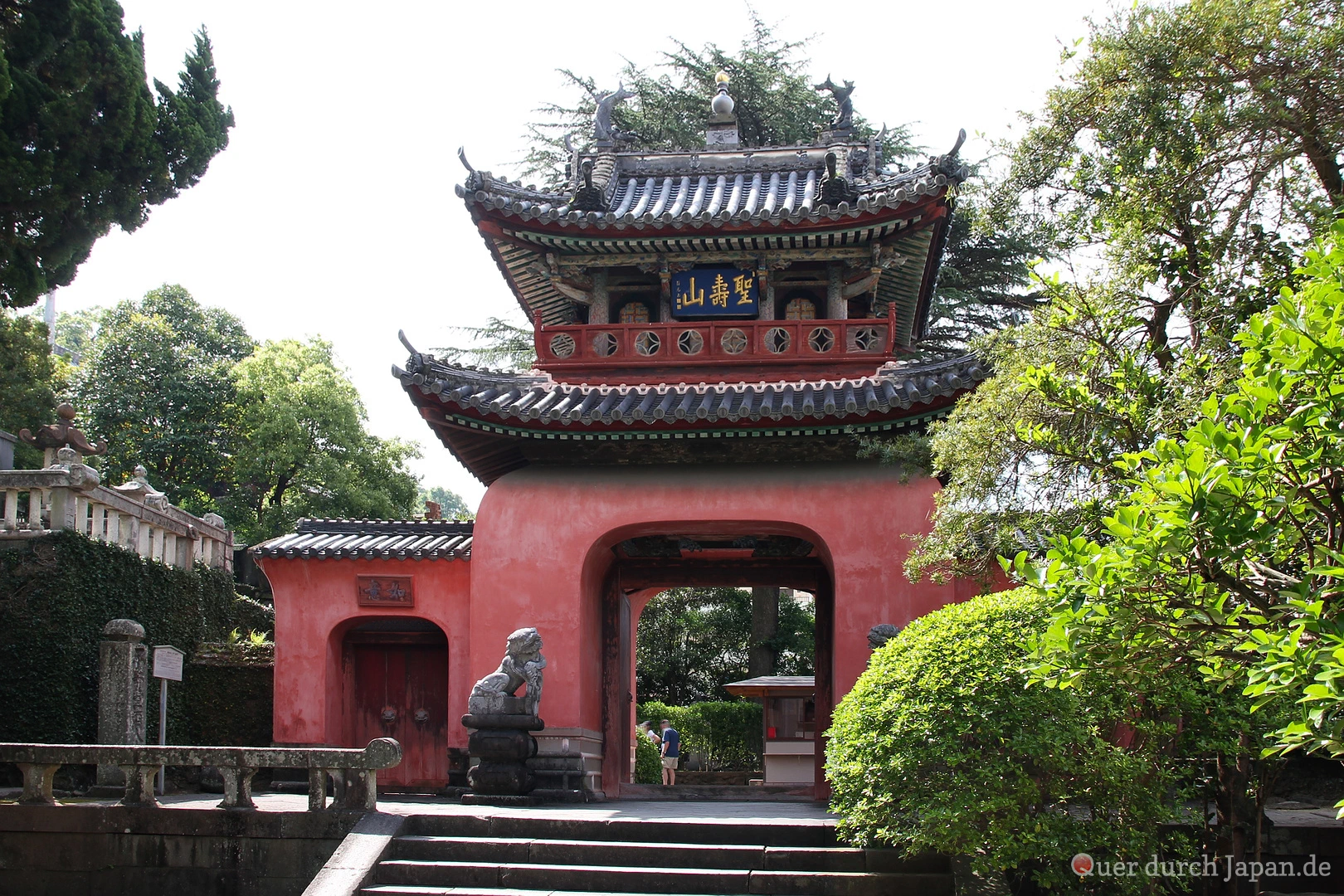
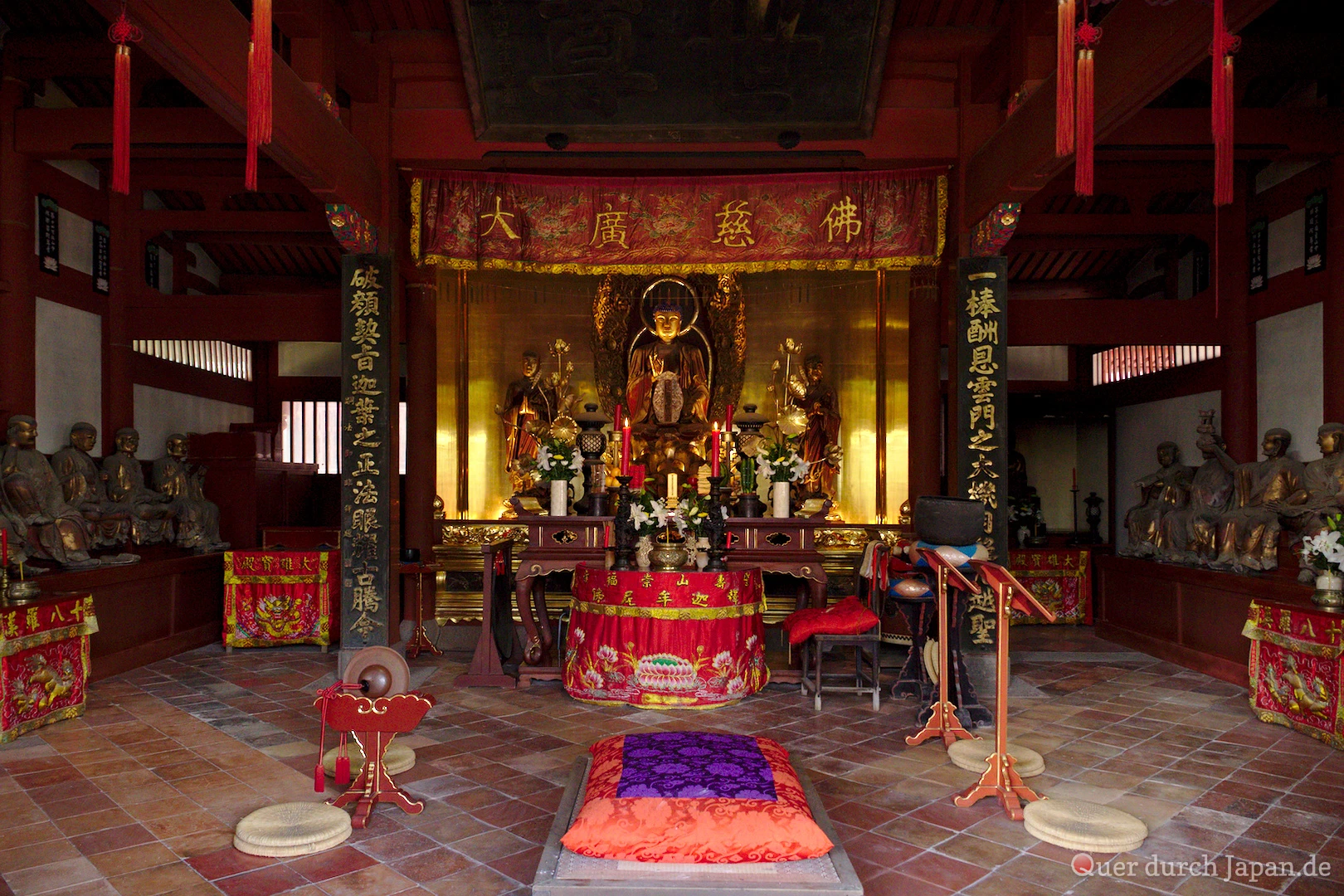
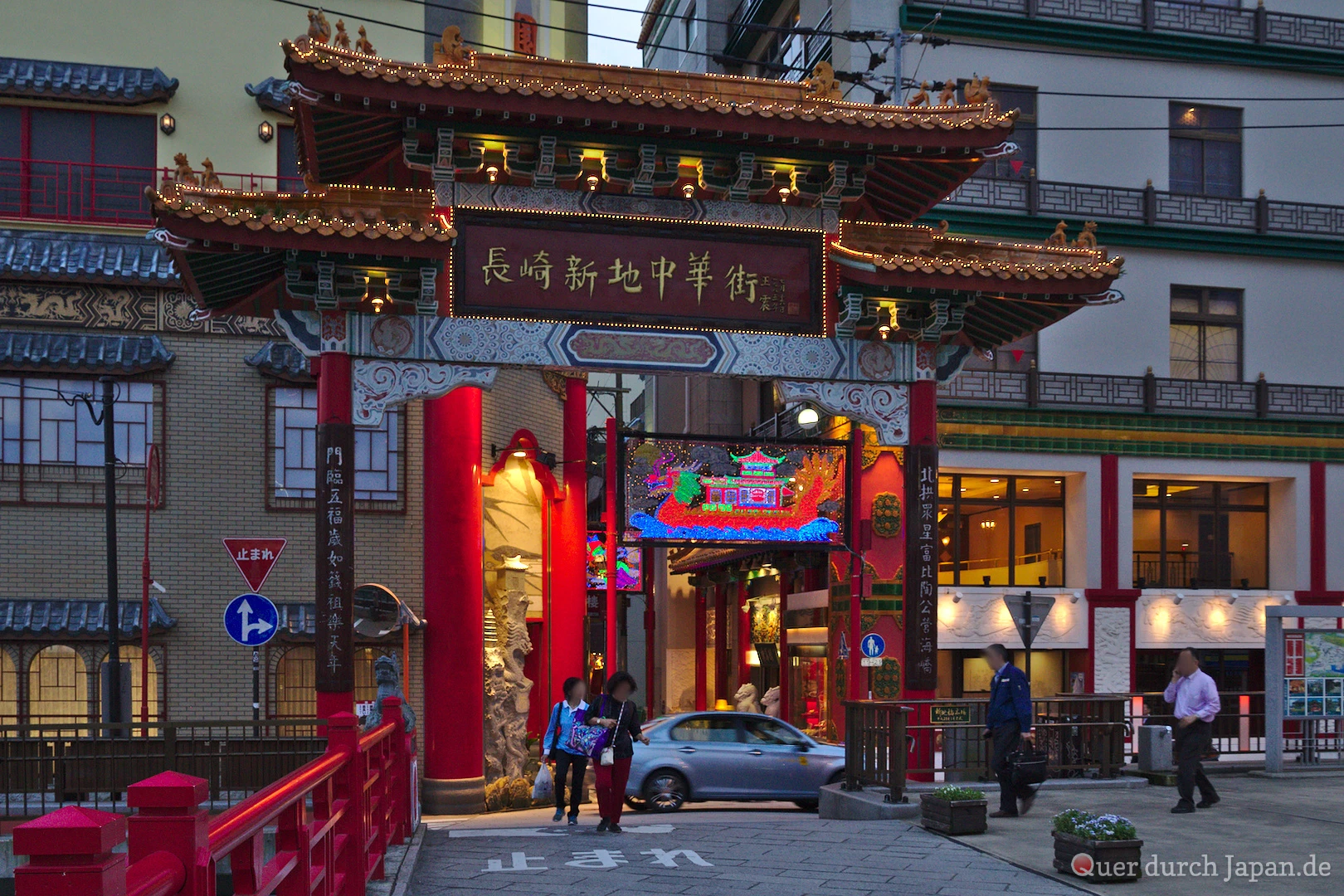
Today we visited Nagasaki. You can really tell the city is geographically close to China; for instance, there’s a Chinese-style temple called Sōfuku-ji.
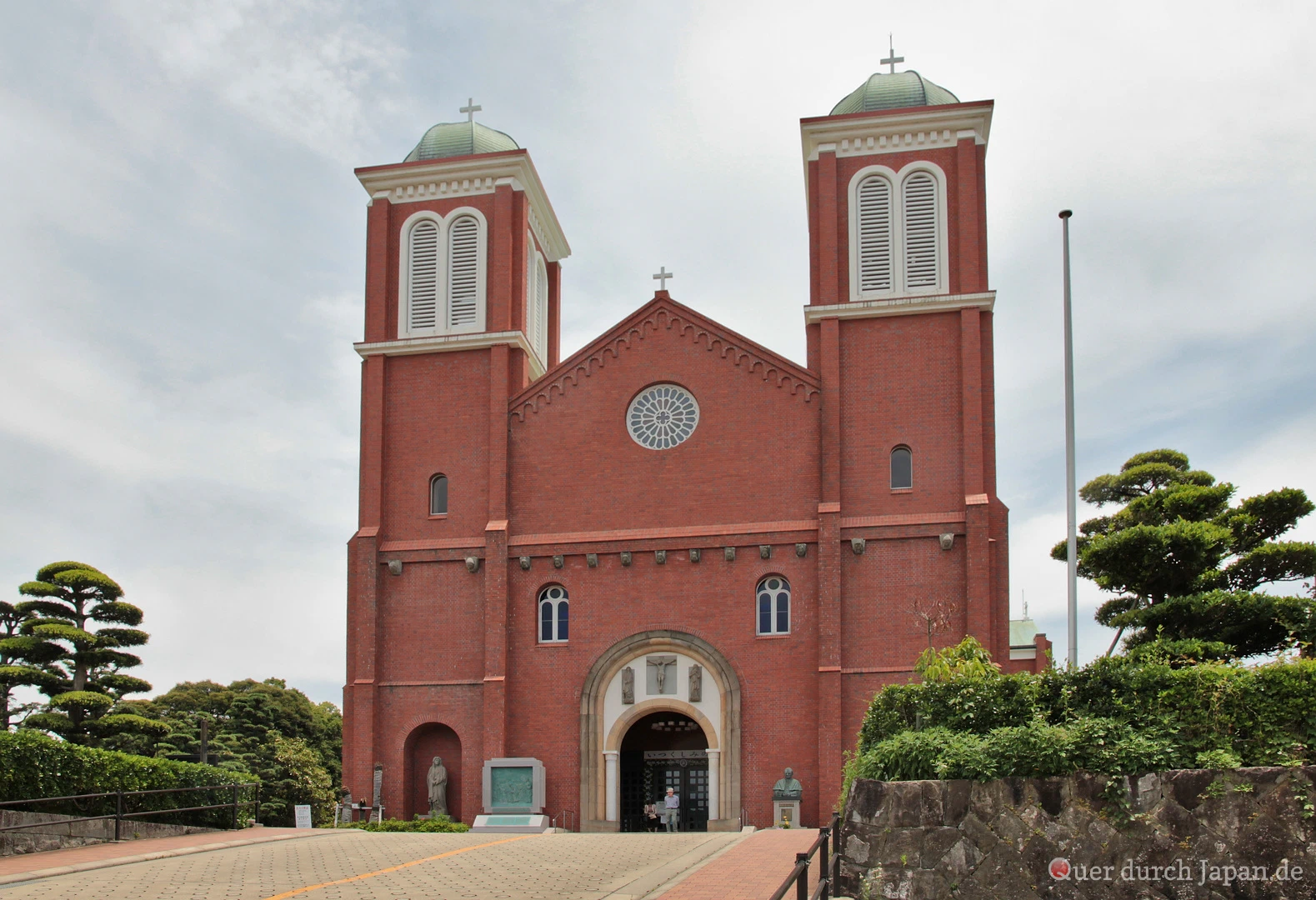
For a long time, Nagasaki was Japan’s gateway to the rest of the world. In the mid-16th century, the Portuguese landed here and started trading with the Japanese. However, their attempt to also convert the country to Christianity wasn’t exactly welcomed with open arms. The bloody battles culminated in a total ban on Christianity in 1614. Even though the ban was lifted in the 19th century, the Christian religion only plays a minor role in Japan. In Nagasaki, you can admire the Ōura Tenshudō, the biggest Catholic church in Japan. A proper native of Cologne would call it a “nice little chapel”. 😉
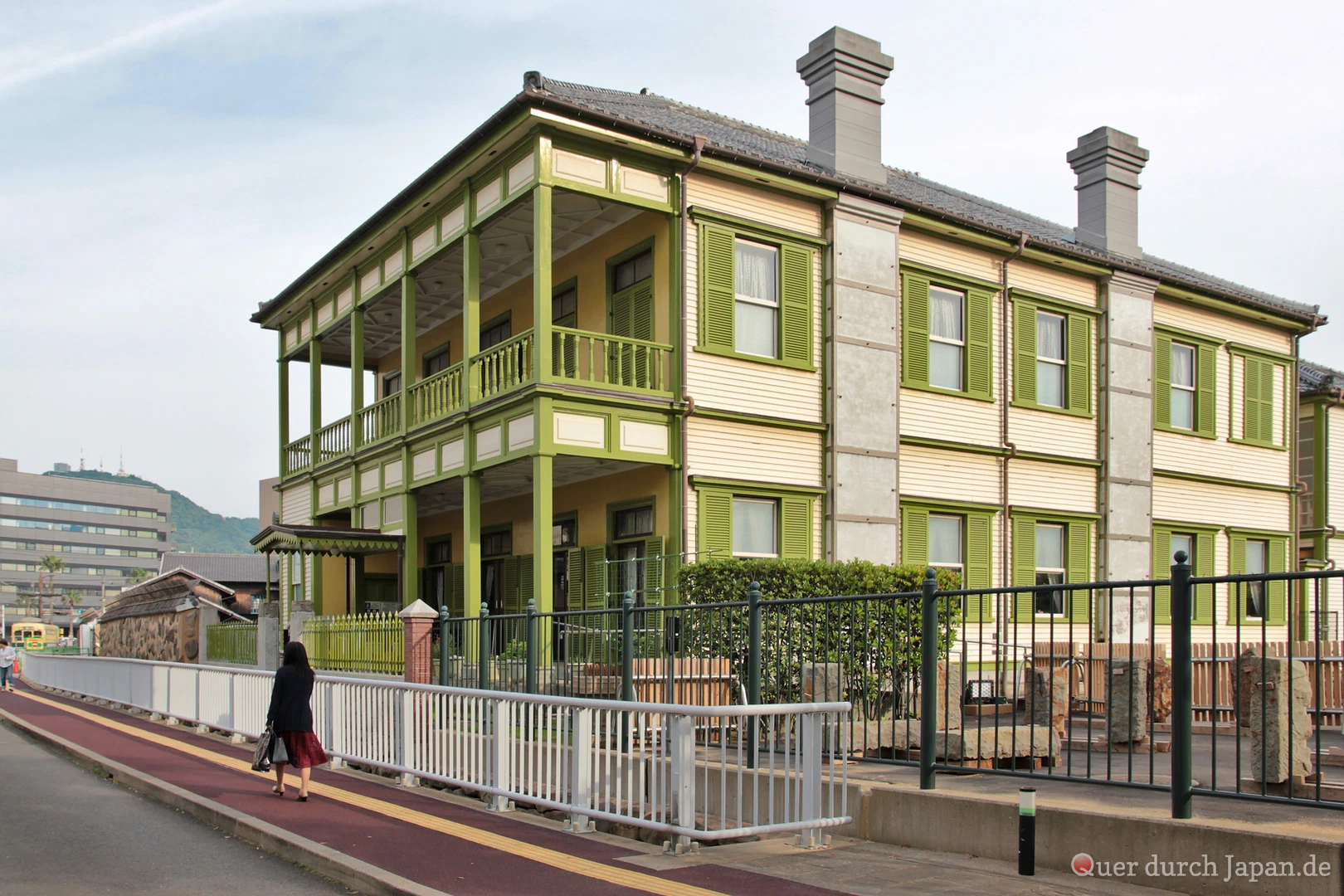
The Dutch, who landed in Japan at the start of the 17th century, were tolerated, on the other hand, because they just wanted to trade. They lived isolated on Dejima, a man-made island that they weren’t allowed to leave. Due to later land reclamation, the island now sits right inside the city and you can’t even tell it was an island anymore. But European-style buildings still serve as a reminder of those days.
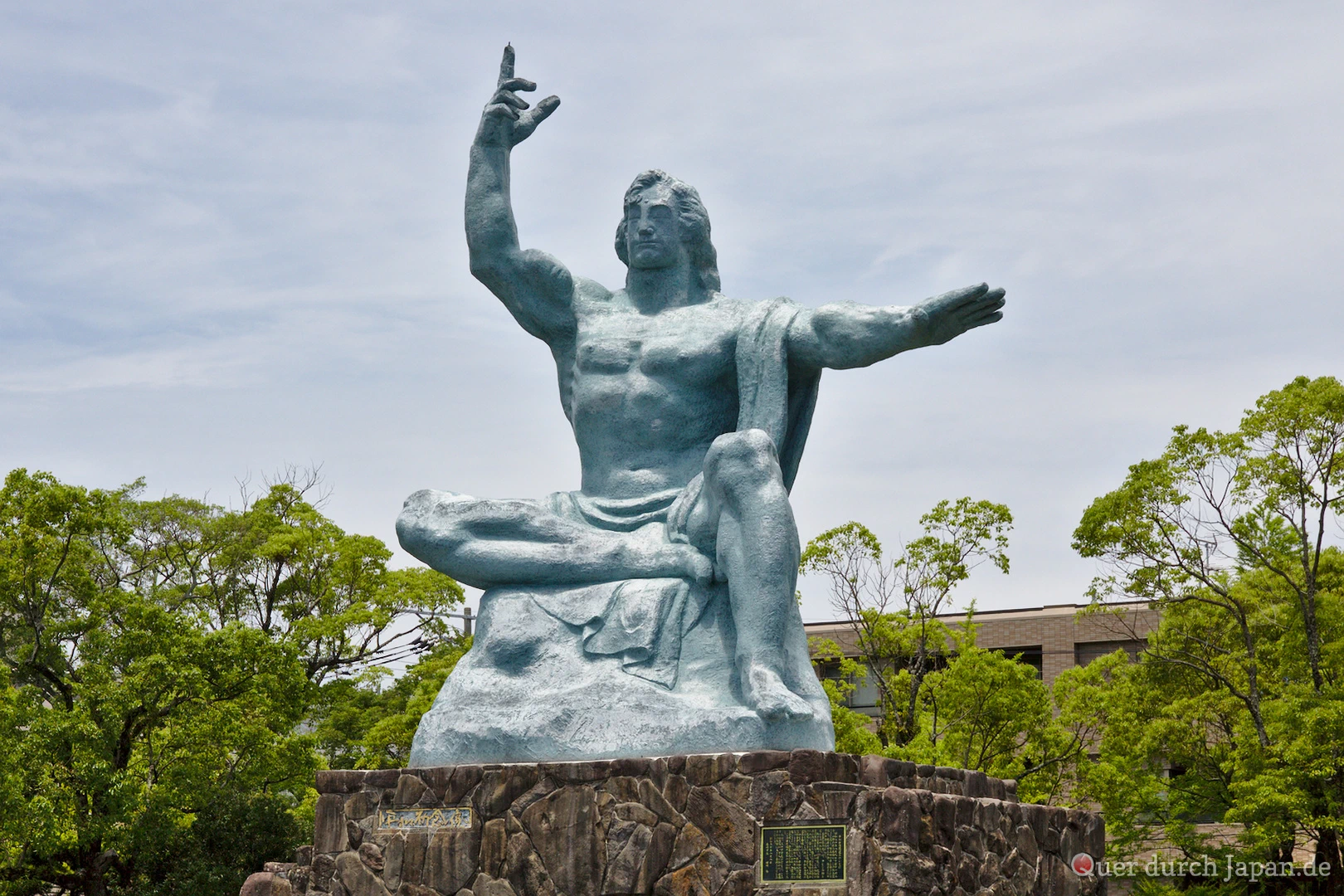
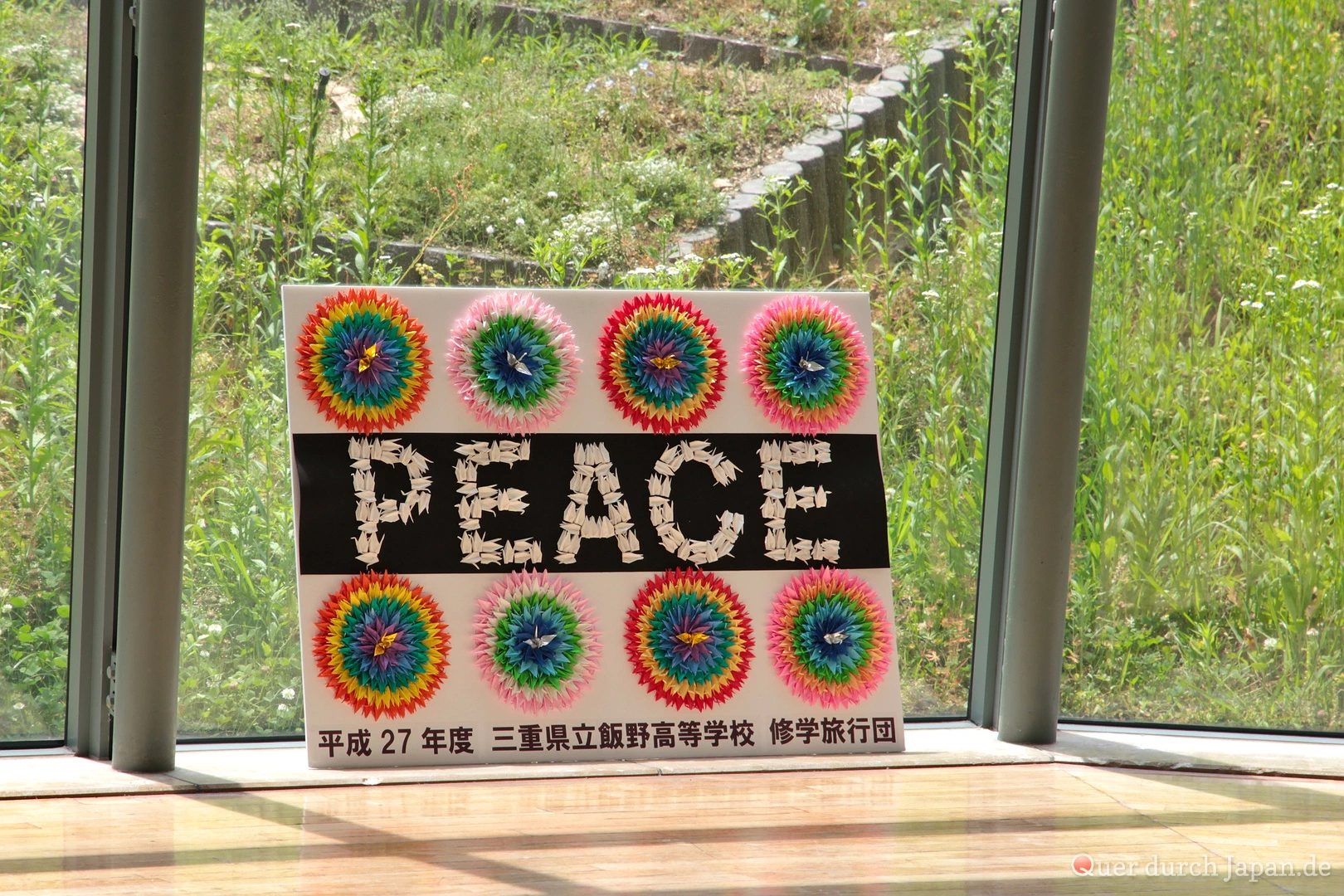
In the Second World War, the city gained tragic fame through the dropping of the second atomic bomb, Fat Man. A memorial museum and other memorial sites commemorate this.
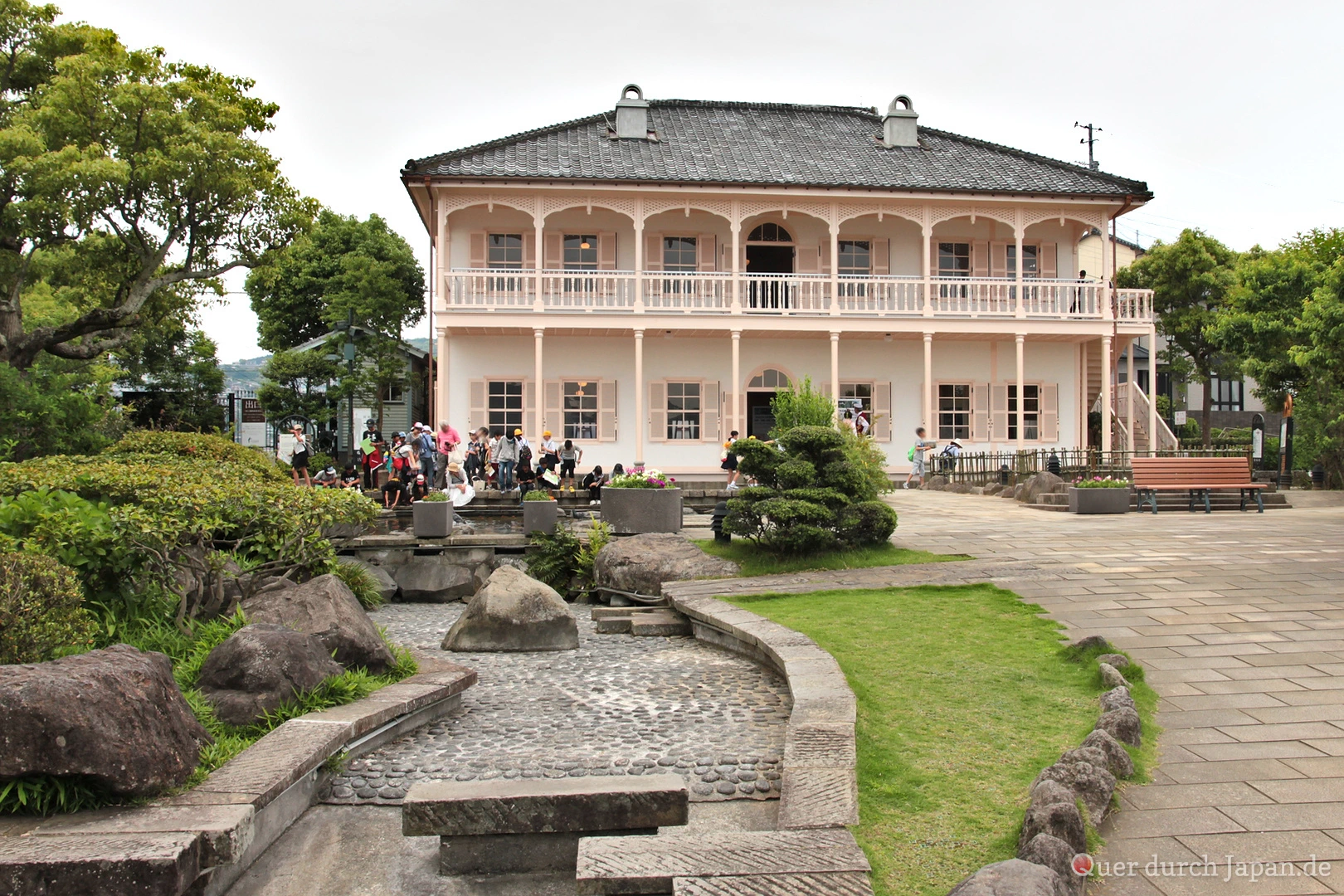
In Glover Hill you can find various English-style buildings. The grounds are a kind of open-air museum; you can look at the buildings from both the outside and the inside.
It was a long day steeped in history. We’re knackered…