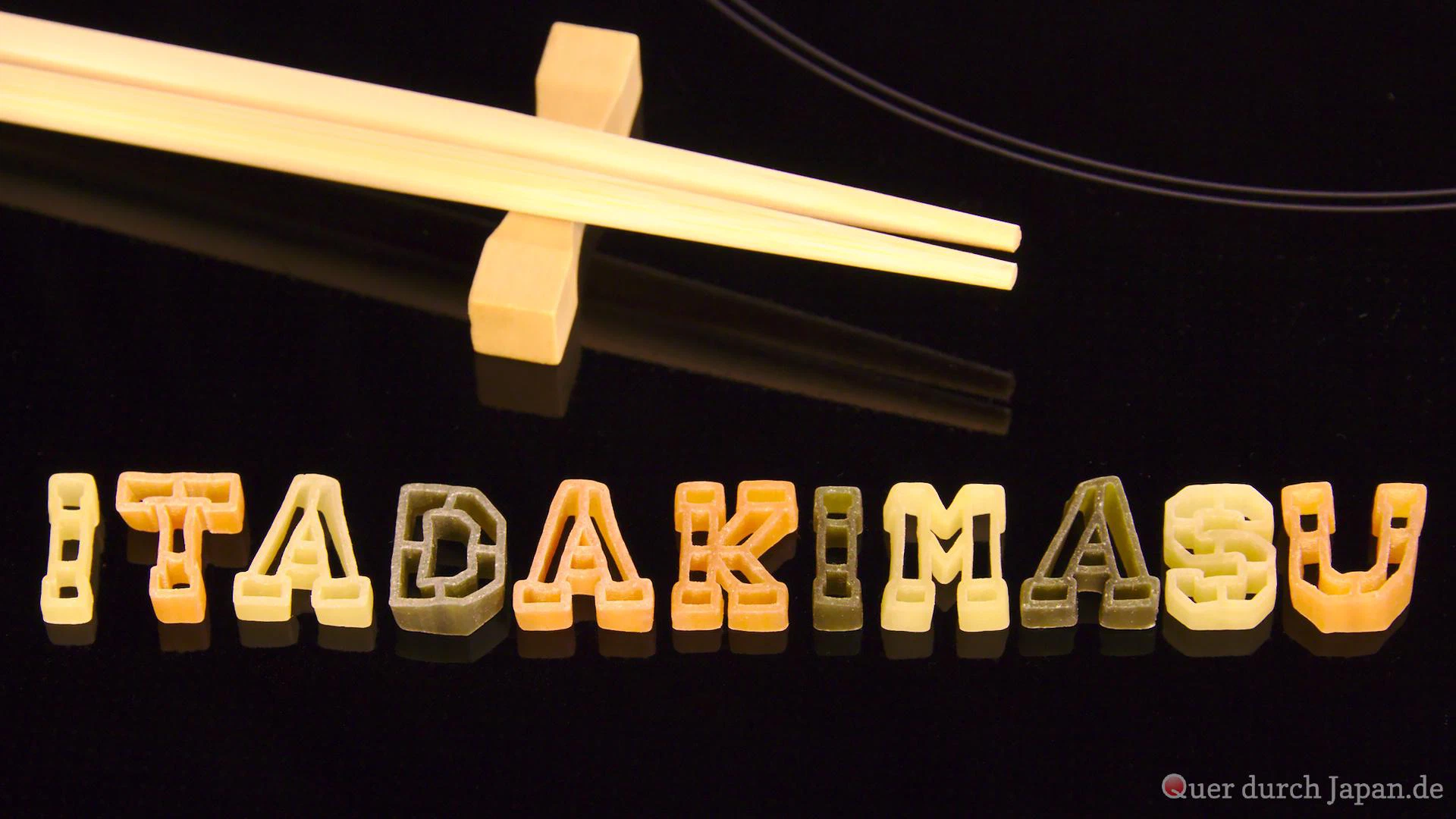
 A look at the phrasebook tells you that “enjoy your meal” in Japanese is いただきます (itadakimasu). But there’s a lot more to it.
With “enjoy your meal”, we’re just wishing the others at the table a tasty meal and a nice time eating together.
Itadakimasu, on the other hand, is an expression of gratitude. You’re thanking the plants that were harvested for the food, and the animals that gave their lives for it. You’re saying thanks to the emperor, your parents, the farmer, the fisherman, the cook, and basically everyone who pitched in so you can tuck into a delicious meal right now. You’re realising that this isn’t something to take for granted. If you take the idea seriously, it also means eating absolutely everything, right down to the last grain of rice.
The original meaning of itadakimasu was “to raise something above your head”. Buddhism brought the custom to the country of taking an object received from a superior and holding it above your head first, as a sign of gratitude and respect. Over time, this turned into a general expression for politely receiving an object.
Using it before eating is pretty new, though. Up until the early twentieth century, it was only a regional thing before it caught on nationwide. Even today, whether you put your hands together while saying it or not varies depending on the region.
PS: At the end of a meal, you say ご馳走様でした (gochisōsama deshita) - “That was a feast.”