 As a tourist in a far-off country, you naturally want to stay in touch with your loved ones back home. Here are a few tips on how to get on the internet as a tourist in Japan and what you should look out for.
Which mobile phones are actually suitable?
The mobile network in Japan differs technically in parts from the one in Europe. But thanks to UMTS, LTE and 5G, practically all smartphones and mobile phones can be used. Only ancient mobiles from our D-network and E-network days won’t work at all in Japan, because there’s no GSM network there. You can safely leave these museum pieces at home.
Phone and SMS
In some countries, you can save money as a tourist by buying a SIM card locally. In Japan, however, by law, SIM cards with phone and SMS functions can only be sold to people who have a permanent residence in the country.
So for phone and SMS, you have to fall back on your own mobile tariff. Japan usually counts as the world zone, so the charges are correspondingly high. With some providers, you even pay when you get called. To avoid a nasty surprise on your mobile bill when you get back, you should check the prices with your provider before setting off.
Important: Now that other countries’ mobile networks can be used within the EU, roaming is enabled on many smartphones. Don’t forget to turn off this feature before entering Japan to avoid expensive surprises.
It’s much cheaper to handle communication over the internet and use common messenger or calling apps. But how do you get onto the worldwide data network?
Mobile internet
Data-only SIM cards can be sold to tourists. There’s actually quite a big selection of data tariffs aimed at visitors. You can buy them at many electronics chains (for example Yodobashi Camera or BIC Camera) and also at vending machines in international airports. Mostly you surf on the network of NTT DoCoMo, the mobile subsidiary of the formerly state-owned phone provider NTT. The mobile network is very well developed and really fast in metropolitan areas.
With most cards, to get started you have to set up an APN on your smartphone and go through a registration procedure before you’re allowed on the internet. The steps are described in detail in English, but it requires a bit of practice using a smartphone.
A selection of tourist SIMs, without any claim to completeness, accuracy or being up-to-date (as of August 2021):
- b-mobile offers an affordable 7 gigabytes for 21 days with their VISITOR SIM. That should be more than enough even for higher demands.
- The IIJmio JAPAN TRAVEL SIM lasts up to 3 months and is therefore suitable for longer stays. The data volume unfortunately isn’t correspondingly high, but can be topped up.
- So-Net offers cards that last 30 and even 60 days.
Make sure you get the right size SIM card when buying, as exchanges are generally out of the question.
Tip: A mobile hotspot can be really handy. This is a small battery-powered device that you put the visitor SIM card into. It connects to the mobile network and provides Wi-Fi access, through which other devices (smartphones, laptops, etc.) can then get on the internet. This way you can surf on the go and still be reachable by phone, because your own SIM card stays in your smartphone. Mobile hotspots are available in any well-stocked electronics shop.
Some smartphones have room for two SIM cards. Here you can use your home SIM card for phone calls and texts and set up a data connection with the tourist SIM.
Hotels
An alternative to the mobile network is WLAN, though the term Wi-Fi is more common internationally.
Many hotels offer their guests free Wi-Fi or at least wired internet access for their laptops. In our experience it usually works, but not always. If you rely on the internet during your trip, for example to organise tickets for the next day or plan routes, you should always have an alternative up your sleeve.
Free Wi-Fi
The provider SoftBank runs around 400,000 Wi-Fi hotspots in Japan. Tourists can use them for free for two weeks after registering via mobile. However, we haven’t had any personal experience with this ourselves.
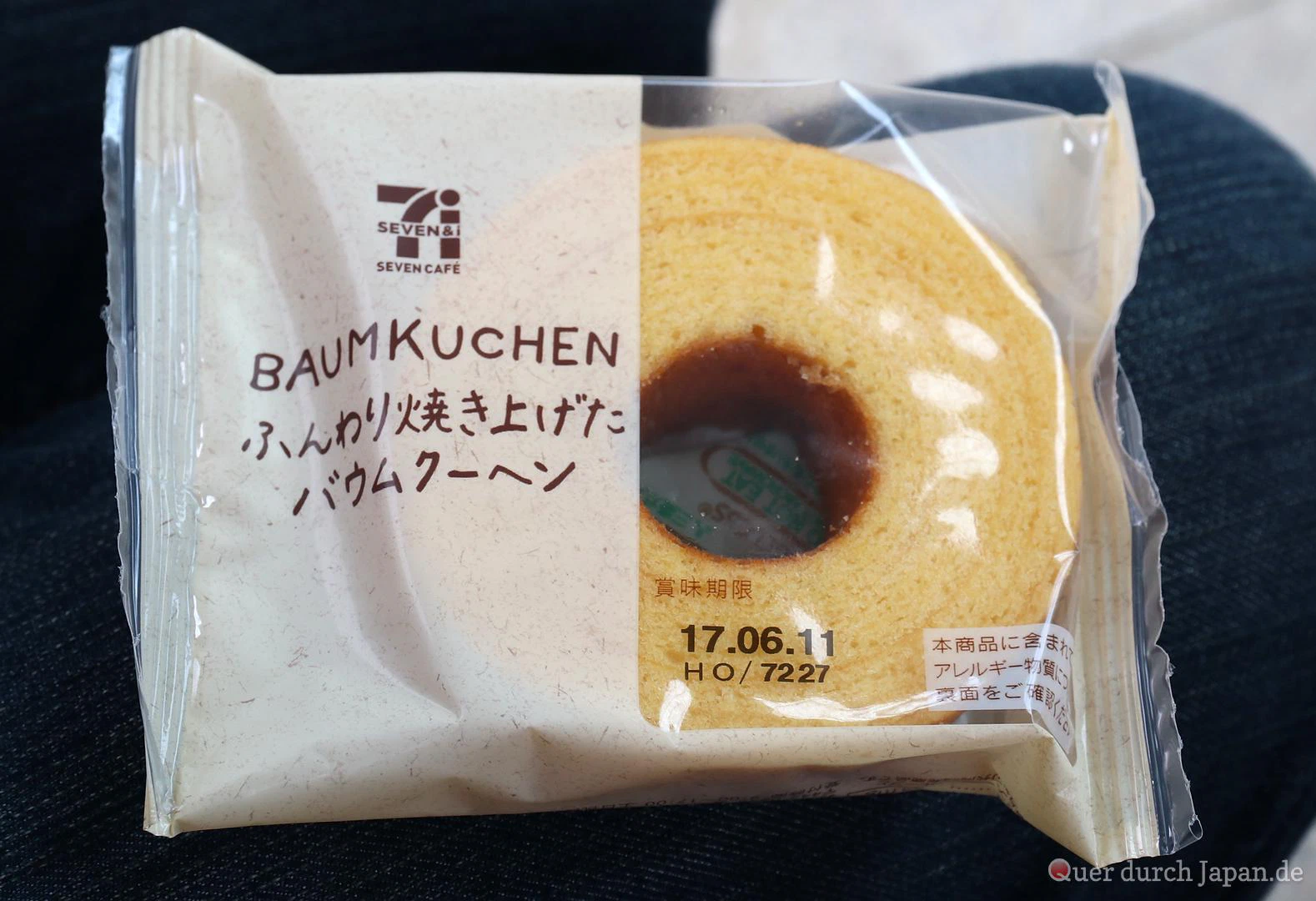 A product that’s firmly associated with Germany and as famous as beer or sausages is the Baumkuchen. It’s so well-known that it even made its way into the language as a loanword, バウムクーヘン (baumukūhen). You can find it all year round, not just in fancy deli shops, but in the supermarket too.