 The Japanese power grid has a voltage of 100 volts and a frequency of 50 Hz or 60 Hz, depending on the region. That doesn’t match the 230 volts and 50 Hz we use in Europe. So you should definitely take a look at all the gadgets you want to take to Japan.
The vast majority of modern chargers or laptop power supplies are designed for worldwide use and can be used in Japan without any issues. Other devices (like shavers, electric toothbrushes, hairdryers) that need 230 volts won’t work in Japan. Some travel gadgets can be switched to 110 volts. Just don’t forget to switch them back when you return, otherwise there’s a fire risk.
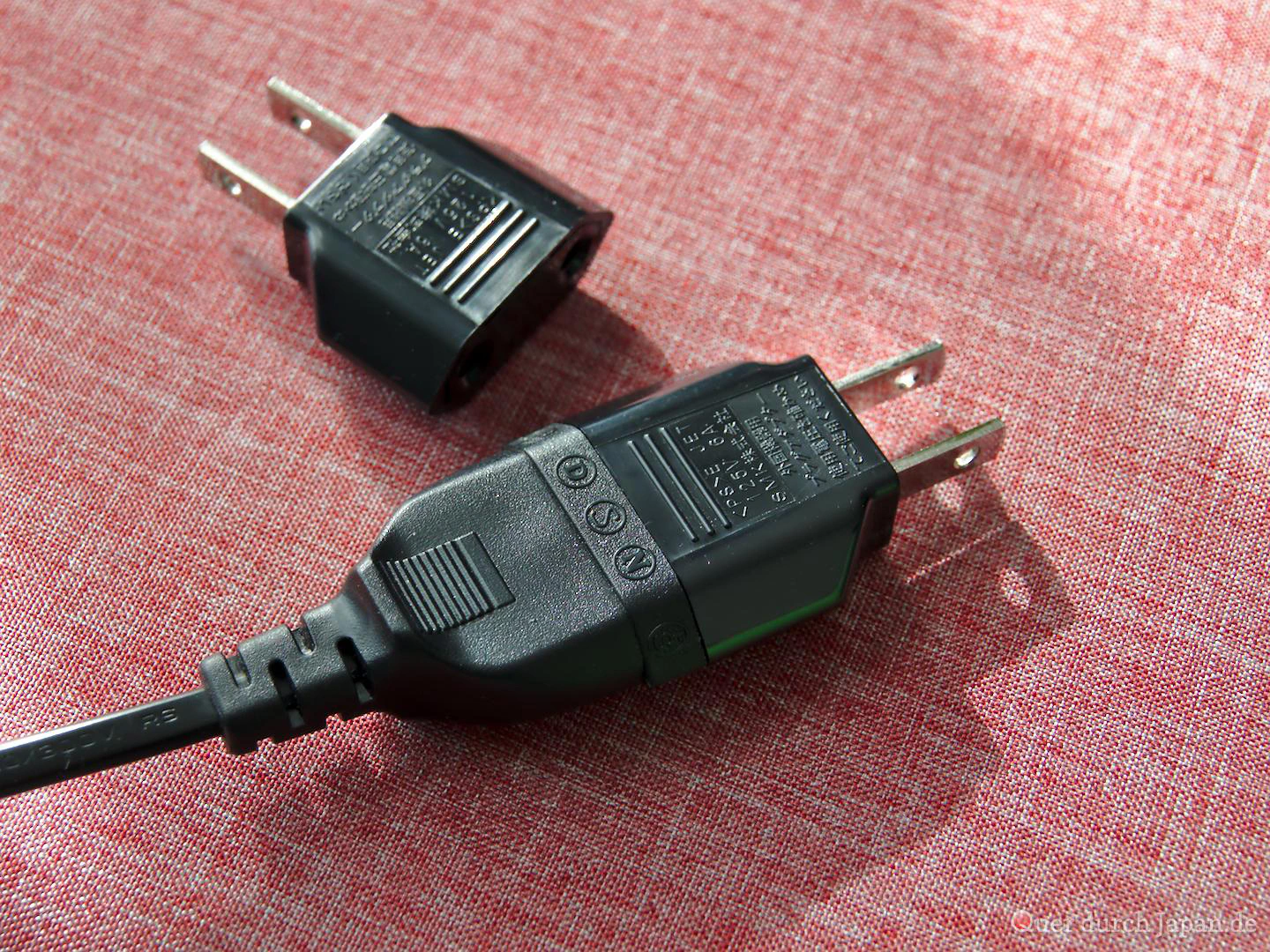
The plugs in Japan are the same as in the US, so NEMA plugs. You can get the right adapters at specialist shops here, in electronics stores in Japan, and sometimes you can even borrow them at the hotel reception.
A lot of travel adapters on the market here have three pins (meaning they’re earthed) and won’t fit into the two-pin sockets you mostly find in hotel rooms. So when buying one, make sure the adapter only has two flat contacts on the plug side (“Type A”).
You can find nice, flat adapters in Japanese electronics shops and also here on big online shopping platforms. They hardly take up any space in your luggage and fit perfectly onto our flat Europlugs. They’re super handy for this.
Round Schuko plugs with an earth contact must never be plugged into two-pin adapters, even if they fit. It means the connected device isn’t earthed, and you risk a lethal electric shock.
NEMA plugs generally don’t offer the same level of safety we’re used to in Europe. The plugs easily slip out of the socket, and there’s a risk of accidentally touching one of the contacts while it’s still live. It’s a good idea to always be careful when handling them.