Whether you’re in a tour group or travelling solo: everyone has their own way of exploring a country. In this slightly longer article, I’ll describe how we planned our individual trips to Japan.
Best time to travel
Japan has several climate zones, which makes it hard to talk about a general “best time to travel”. For the south coast of the main island – the most attractive part of the country for tourists – the time during the cherry blossom (April, May) as well as late summer and autumn promises pleasantly warm to hot temperatures and little rain. The actual summer is really hot and rainy. In late summer, typhoons also threaten to mess up your travel plans.
You should definitely avoid Golden Week. That’s a series of public holidays at the end of April and beginning of May when almost the whole of Japan is out and about to enjoy the good spring weather and the sight of the cherry blossoms. But that also means trains and hotels are packed, sights are overrun, and lots of shops are closed. It’s similar during the Obon festival in August and around New Year in January.
What to see?
You can find more than enough tips for sightseeing, from classic travel guides and travel blogs to TV documentaries. The Japan Guide website is always our main go-to spot. It’s really comprehensive, up-to-date, and gives info on sights, side trips, and how to get there. The free-to-air channel NHK World also shows loads of travel tips about the country.
We always keep a little list of things we’ve picked up somewhere and want to see for ourselves. When we start planning, we make a pre-selection and mark them on the map. You quickly get a picture of the places you want to visit and how much time you’ll probably need there.
Transport
 You get to Japan by plane. The flight time for a direct flight is around 11 hours. The main international airports are Narita, Haneda (both in Tōkyō), and Kansai (Ōsaka), but some airlines also fly to other airports.
Once you’re there, the train is the way to go. The rail network is dense, the trains are punctual and reliable. With the Shinkansen bullet train, you can reach almost any destination in the country in a few hours. Ideal for tourists is the Japan Rail Pass, which allows you to use most trains for up to three weeks for a flat rate.
Once we’ve found the places we want to visit, we check on HyperDia to see if there are train connections, how long the journey times are, and whether the trips are included in the Rail Pass or have to be paid for extra.
Since May 2020, there are maximum luggage dimensions for Japan’s Shinkansen. To work this out, you add the length, width, and height of your suitcase. Suitcases with outer dimensions over 250 cm or weighing more than 30 kg aren’t allowed on the Shinkansen anymore. On the main route between Tōkyō and Kyūshū, luggage with outer dimensions over 160 cm must also be stowed behind the last row of seats. A corresponding seat reservation is then absolutely necessary, plus a fee of 1000¥ per piece of luggage. Luggage with smaller outer dimensions can still be carried for free on the luggage racks or at your own seat.
When we’re there, we get around on foot, by taxi, or on public transport. Basically, it’s also possible to hire a car, but rental prices and road tolls aren’t exactly cheap. Holders of a German driving licence also have to get it translated into Japanese beforehand. If you want to know more: WanderWeib has blogged a fantastic article about driving in Japan.
Hotels
 We like to know where we’ll be staying before we travel. So we book our accommodation early on well-known hotel booking sites. Then there’s loads to choose from, and plus, that way we know how much cash we’ll be spending on hotels.
The downside is, of course, that you aren’t very flexible once you’re there, you have to stick to your itinerary. We could use the hotel sites to find our next hotel at short notice while we’re out there. But in cities like Kyōto, affordable hotels are often fully booked well in advance.
Western hotels are about the same price level as Germany, but especially with budget hotels, the rooms can be really tiny. The room rate is usually calculated in Yen, so you should add a buffer for currency fluctuations to your budget. Some cities also charge a small tourist tax that has to be paid at the hotel. Breakfast is often pretty mediocre, even in expensive hotels. It pays off to read the reviews and maybe book the room without breakfast.
The traditional hotels, called Ryokan, are definitely worth a visit. Though you should prepare yourself a little so you can properly enjoy the experience.
Detailed planning
Once the accommodation and travel dates are set, we plan the sightseeing. We make a list of the things we definitely want to see there. A list of other sights is handy if there’s time left over or if you happen to be nearby anyway.
When planning, we always leave a bit of wiggle room for spontaneous stuff, surprises, or a little shopping spree in the shopping streets. Even odd days with barely any plans can be lovely and entertaining.
Then there are the travel days, when you change locations and have your luggage with you. You don’t see much on those days, and yet those hours come in really handy, when you sit relaxed in the train, look out the window, and maybe try a Bentō.
Finding your way around
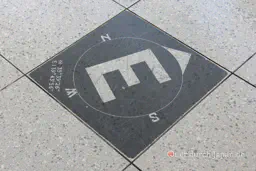 Finding your way around Japanese cities is a challenge, because only a few streets have names, and asking for directions is pretty tricky due to the language barrier.
For us, a hiking GPS has become an absolute must-have. When planning at home, we already mark the stations, hotels, and sights as waypoints. We map out hard-to-find paths as routes. On-site, we mark interesting spots (like a restaurant we stumbled upon for dinner) to visit later. A decent hiking GPS easily lasts a day before needing a charge, and it also tracks the route you’ve taken, which helps later with matching photos to a location.
You can usually buy the right maps from the GPS device manufacturer. For Garmin devices, you can also download an Open Street Map of Japan for free (and legally).
Food and Drink
Japan has a reputation for being really expensive. You can’t really say that across the board. Once the flight, hotels, and Rail Pass are paid for, the costs on the ground are manageable. You should budget for entry fees, souvenirs, food, drinks, and snacks, as well as the odd trip on public transport or taxis.
If you aren’t too fussy about food, you’ll pay about the same in an udon or schnitzel place or an Izakaya as you would here in a good pub. Alternatively, for dinner in your hotel room, you can find decent sushi, cold schnitzels, ready-made croquettes, or salads at a cheap price in supermarkets or train stations. If push comes to shove, you can hit up the usual fast-food chains. There are European restaurants too, of course, but they’re something special in Japan and therefore pricier than back home. You can easily pay around 1800¥ for an ordinary pizza there.
A quick plea
After the lockdowns of the last few years, people in Japan are chuffed that the borders are finally open and tourists are flocking back to the country.
But this joy is a double-edged sword. Like us, Japan is battling a shortage of skilled workers, which you can really feel in public transport, hotels, and restaurants. Especially in big cities, it might be that the already scarce buses and trams are extra packed with crowds of tourists, or the waits at restaurants or for taxis are pretty long. This is where you need to show some patience. The situation is rubbish for everyone.
Plus, with its reputation for being friendly and affordable, Japan is now drawing in loads of tourists who unfortunately don’t have the best manners. In Kyōto, for example, complaints are piling up about tourists trampling around private gardens or trespassing into courtyards to snap photos of geikos. Other adventurers brag on social media about how they blag free train rides or otherwise take advantage of the country’s generosity.
Tourists like this don’t just make life hard for the Japanese, they also ruin the good relationship that’s existed between locals and tourists up to now, and ultimately wreck the travel experience for all of us.
So it really should go without saying: please respect the country and its people, show a bit of modesty, stick to the rules, and don’t abuse their hospitality! If you’d rather “go wild” on holiday, you’ll definitely find cheaper and closer destinations, ideally at home.
Off we go…
That’s actually about it for the prep. All that’s left are general things like the necessary travel documents. And then there’s nothing standing in the way of your visit to the country.
One last tip to finish off: you should plan for plenty of spare room in your luggage for all those souvenirs and gifts. 😉