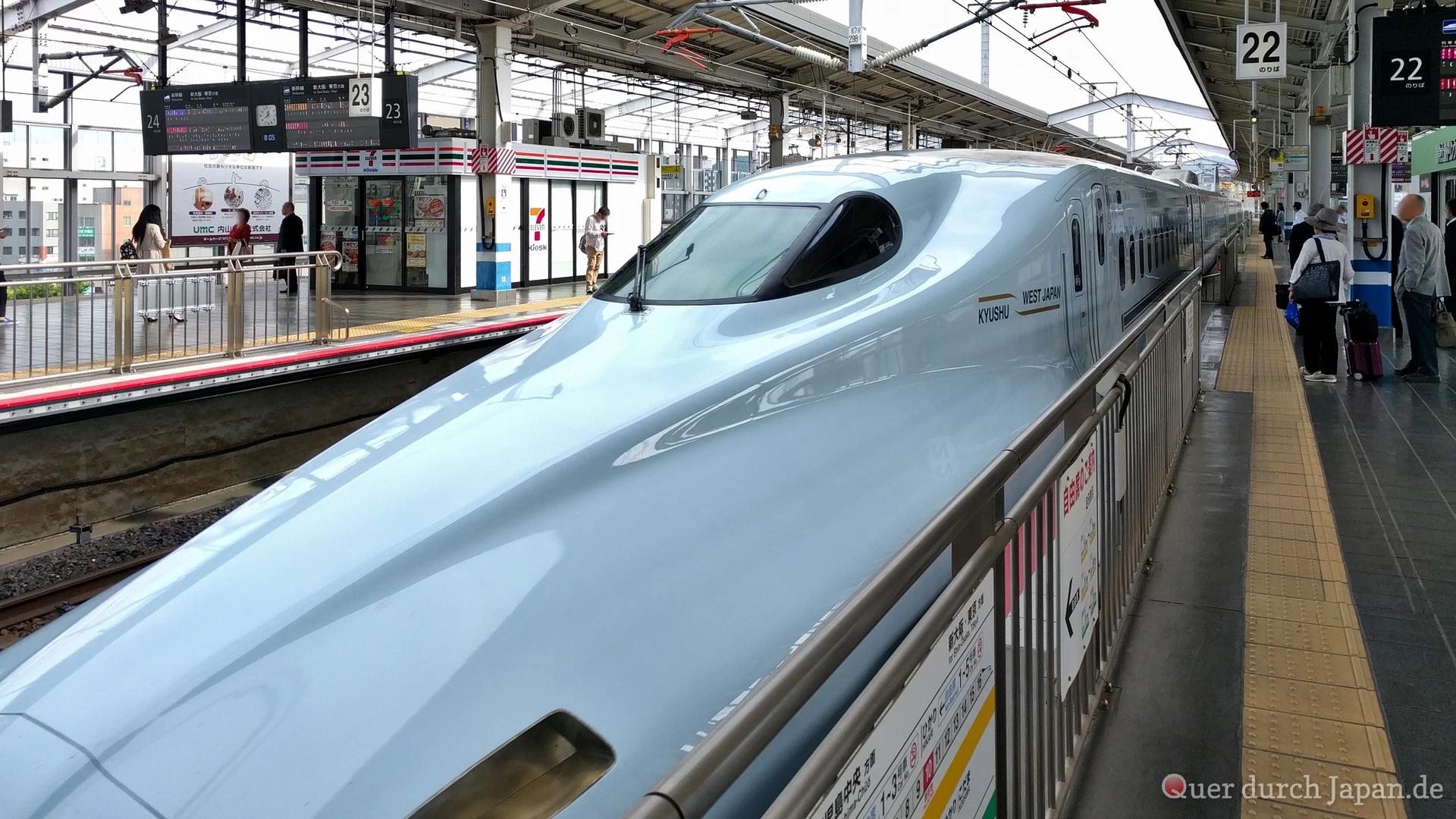
Right now we’re sitting in the Shinkansen bullet train on the way to our westernmost stop, Fukuoka. With a top speed of 300 km/h, the trip there will take about 100 minutes. Just enough time to tell you a bit about the Shinkansen.
For our trips, we got the Japan Rail Pass back in Germany. It lets you use almost all Japan Railways (JR) trains on almost all routes for up to three weeks for a flat rate, seat reservations included. The carriages are split into “reserved”, “non-reserved”, and “Green Car” (which is like our 1st class). In the non-reserved carriages, you can just find an empty seat and keep it for the rest of your journey. For the other carriages, you always need a seat reservation.
The Shinkansen run on their own tracks. Because of this, some cities have a separate Shinkansen station, for instance, there’s Ōsaka station (for normal trains) and Shin-Ōsaka (for Shinkansen). There are different speed classes, but they only differ in the number of stations they stop at. Out on the open track, all trains run continuously at full speed, since they don’t have to share the lines with slower trains.
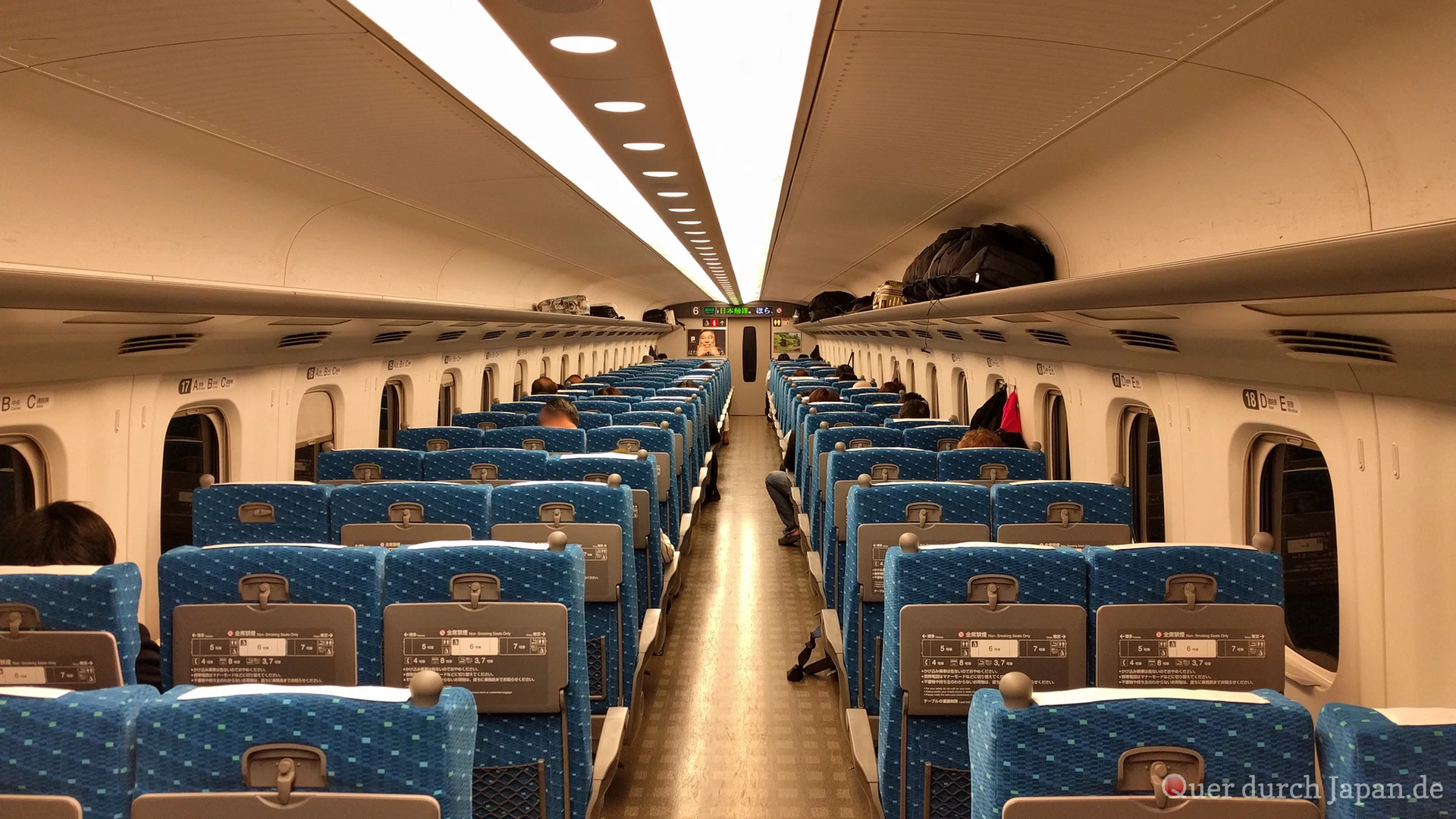
The Shinkansen are spacious and don’t fit the cliché of crammed trains that we normally associate with Japan. Quite the opposite: the normal carriage already reminds us of first class on the German ICE, and there’s even plenty of room for luggage. You always sit facing the direction of travel, as the seats are rotatable and the staff just spin them around at the terminal stations.
And the best bit for last: the trains in Japan are punctual to the minute. Travelling by train here is a real joy!