#Reisetipps

Reiseplanung

Whether you’re in a tour group or travelling solo: everyone has their own way of exploring a country. In this slightly longer article, I’ll describe how we planned our individual trips to Japan.

Best time to travel

Japan has several climate zones, which makes it hard to talk about a general “best time to travel”. For the south coast of the main island – the most attractive part of the country for tourists – the time during the cherry blossom (April, May) as well as late summer and autumn promises pleasantly warm to hot temperatures and little rain. The actual summer is really hot and rainy. In late summer, typhoons also threaten to mess up your travel plans.

You should definitely avoid Golden Week. That’s a series of public holidays at the end of April and beginning of May when almost the whole of Japan is out and about to enjoy the good spring weather and the sight of the cherry blossoms. But that also means trains and hotels are packed, sights are overrun, and lots of shops are closed. It’s similar during the Obon festival in August and around New Year in January.

What to see?

You can find more than enough tips for sightseeing, from classic travel guides and travel blogs to TV documentaries. The Japan Guide website is always our main go-to spot. It’s really comprehensive, up-to-date, and gives info on sights, side trips, and how to get there. The free-to-air channel NHK World also shows loads of travel tips about the country.

We always keep a little list of things we’ve picked up somewhere and want to see for ourselves. When we start planning, we make a pre-selection and mark them on the map. You quickly get a picture of the places you want to visit and how much time you’ll probably need there.

Transport

You get to Japan by plane. The flight time for a direct flight is around 11 hours. The main international airports are Narita, Haneda (both in Tōkyō), and Kansai (Ōsaka), but some airlines also fly to other airports.

Once you’re there, the train is the way to go. The rail network is dense, the trains are punctual and reliable. With the Shinkansen bullet train, you can reach almost any destination in the country in a few hours. Ideal for tourists is the Japan Rail Pass, which allows you to use most trains for up to three weeks for a flat rate.

Once we’ve found the places we want to visit, we check on HyperDia to see if there are train connections, how long the journey times are, and whether the trips are included in the Rail Pass or have to be paid for extra.

Since May 2020, there are maximum luggage dimensions for Japan’s Shinkansen. To work this out, you add the length, width, and height of your suitcase. Suitcases with outer dimensions over 250 cm or weighing more than 30 kg aren’t allowed on the Shinkansen anymore. On the main route between Tōkyō and Kyūshū, luggage with outer dimensions over 160 cm must also be stowed behind the last row of seats. A corresponding seat reservation is then absolutely necessary, plus a fee of 1000¥ per piece of luggage. Luggage with smaller outer dimensions can still be carried for free on the luggage racks or at your own seat.

When we’re there, we get around on foot, by taxi, or on public transport. Basically, it’s also possible to hire a car, but rental prices and road tolls aren’t exactly cheap. Holders of a German driving licence also have to get it translated into Japanese beforehand. If you want to know more: WanderWeib has blogged a fantastic article about driving in Japan.

Hotels

We like to know where we’ll be staying before we travel. So we book our accommodation early on well-known hotel booking sites. Then there’s loads to choose from, and plus, that way we know how much cash we’ll be spending on hotels.

The downside is, of course, that you aren’t very flexible once you’re there, you have to stick to your itinerary. We could use the hotel sites to find our next hotel at short notice while we’re out there. But in cities like Kyōto, affordable hotels are often fully booked well in advance.

Western hotels are about the same price level as Germany, but especially with budget hotels, the rooms can be really tiny. The room rate is usually calculated in Yen, so you should add a buffer for currency fluctuations to your budget. Some cities also charge a small tourist tax that has to be paid at the hotel. Breakfast is often pretty mediocre, even in expensive hotels. It pays off to read the reviews and maybe book the room without breakfast.

The traditional hotels, called Ryokan, are definitely worth a visit. Though you should prepare yourself a little so you can properly enjoy the experience.

Detailed planning

Once the accommodation and travel dates are set, we plan the sightseeing. We make a list of the things we definitely want to see there. A list of other sights is handy if there’s time left over or if you happen to be nearby anyway.

When planning, we always leave a bit of wiggle room for spontaneous stuff, surprises, or a little shopping spree in the shopping streets. Even odd days with barely any plans can be lovely and entertaining.

Then there are the travel days, when you change locations and have your luggage with you. You don’t see much on those days, and yet those hours come in really handy, when you sit relaxed in the train, look out the window, and maybe try a Bentō.

Finding your way around
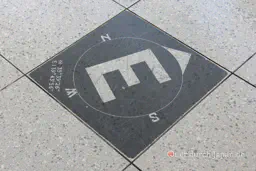
Finding your way around Japanese cities is a challenge, because only a few streets have names, and asking for directions is pretty tricky due to the language barrier.

For us, a hiking GPS has become an absolute must-have. When planning at home, we already mark the stations, hotels, and sights as waypoints. We map out hard-to-find paths as routes. On-site, we mark interesting spots (like a restaurant we stumbled upon for dinner) to visit later. A decent hiking GPS easily lasts a day before needing a charge, and it also tracks the route you’ve taken, which helps later with matching photos to a location.

You can usually buy the right maps from the GPS device manufacturer. For Garmin devices, you can also download an Open Street Map of Japan for free (and legally).

Food and Drink

Japan has a reputation for being really expensive. You can’t really say that across the board. Once the flight, hotels, and Rail Pass are paid for, the costs on the ground are manageable. You should budget for entry fees, souvenirs, food, drinks, and snacks, as well as the odd trip on public transport or taxis.

If you aren’t too fussy about food, you’ll pay about the same in an udon or schnitzel place or an Izakaya as you would here in a good pub. Alternatively, for dinner in your hotel room, you can find decent sushi, cold schnitzels, ready-made croquettes, or salads at a cheap price in supermarkets or train stations. If push comes to shove, you can hit up the usual fast-food chains. There are European restaurants too, of course, but they’re something special in Japan and therefore pricier than back home. You can easily pay around 1800¥ for an ordinary pizza there.

A quick plea

After the lockdowns of the last few years, people in Japan are chuffed that the borders are finally open and tourists are flocking back to the country.

But this joy is a double-edged sword. Like us, Japan is battling a shortage of skilled workers, which you can really feel in public transport, hotels, and restaurants. Especially in big cities, it might be that the already scarce buses and trams are extra packed with crowds of tourists, or the waits at restaurants or for taxis are pretty long. This is where you need to show some patience. The situation is rubbish for everyone.

Plus, with its reputation for being friendly and affordable, Japan is now drawing in loads of tourists who unfortunately don’t have the best manners. In Kyōto, for example, complaints are piling up about tourists trampling around private gardens or trespassing into courtyards to snap photos of geikos. Other adventurers brag on social media about how they blag free train rides or otherwise take advantage of the country’s generosity.

Tourists like this don’t just make life hard for the Japanese, they also ruin the good relationship that’s existed between locals and tourists up to now, and ultimately wreck the travel experience for all of us.

So it really should go without saying: please respect the country and its people, show a bit of modesty, stick to the rules, and don’t abuse their hospitality! If you’d rather “go wild” on holiday, you’ll definitely find cheaper and closer destinations, ideally at home.

Off we go…

That’s actually about it for the prep. All that’s left are general things like the necessary travel documents. And then there’s nothing standing in the way of your visit to the country.

One last tip to finish off: you should plan for plenty of spare room in your luggage for all those souvenirs and gifts. 😉
Unter Strom

The Japanese power grid has a voltage of 100 volts and a frequency of 50 Hz or 60 Hz, depending on the region. That doesn’t match the 230 volts and 50 Hz we use in Europe. So you should definitely take a look at all the gadgets you want to take to Japan.

The vast majority of modern chargers or laptop power supplies are designed for worldwide use and can be used in Japan without any issues. Other devices (like shavers, electric toothbrushes, hairdryers) that need 230 volts won’t work in Japan. Some travel gadgets can be switched to 110 volts. Just don’t forget to switch them back when you return, otherwise there’s a fire risk.

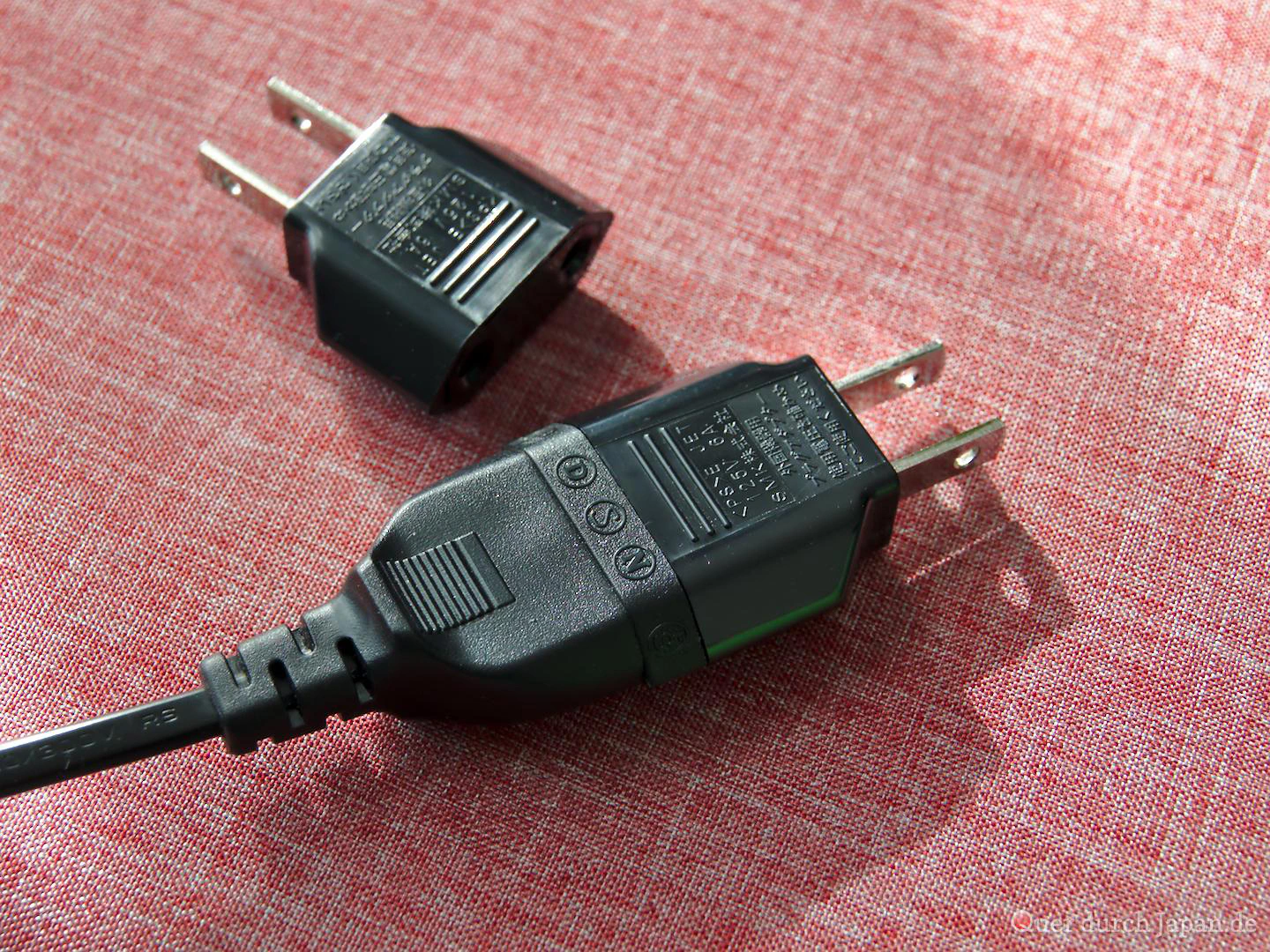
The plugs in Japan are the same as in the US, so NEMA plugs. You can get the right adapters at specialist shops here, in electronics stores in Japan, and sometimes you can even borrow them at the hotel reception.

A lot of travel adapters on the market here have three pins (meaning they’re earthed) and won’t fit into the two-pin sockets you mostly find in hotel rooms. So when buying one, make sure the adapter only has two flat contacts on the plug side (“Type A”).

You can find nice, flat adapters in Japanese electronics shops and also here on big online shopping platforms. They hardly take up any space in your luggage and fit perfectly onto our flat Europlugs. They’re super handy for this.

Round Schuko plugs with an earth contact must never be plugged into two-pin adapters, even if they fit. It means the connected device isn’t earthed, and you risk a lethal electric shock.

NEMA plugs generally don’t offer the same level of safety we’re used to in Europe. The plugs easily slip out of the socket, and there’s a risk of accidentally touching one of the contacts while it’s still live. It’s a good idea to always be careful when handling them.

Reisevorbereitung

Japan trip booked? Soon comes the exciting bit: packing your bags. Since Japan is (sadly) not exactly round the corner, good prep is key so getting through border control is a breeze and you’ve got everything you need over there.

This article only covers trips to Japan for tourist purposes lasting a few days or weeks.

What else goes into our luggage besides clothes:

  • Travel docs
  • Meds
  • Insurance papers

I’ll write a bit more about these three points in a sec. Right at the bottom there’s also a quick word about entry requirements.

What else needs to come along:

  • Your plane tickets, or you won’t get far. 😉
  • Enough cash and credit cards.
  • The Railpass voucher from the travel agency, you can’t get it in Japan!
  • Our travel itinerary with the booked hotels and the list of stuff we want to see.
  • Our camera gear, obviously.
  • A handheld GPS with Japan maps and important spots (sightseeing spots, hotels, train stations).
  • A mobile hotspot for internet access.
  • Travel guide and phrasebook.
  • Plug adapters, though you can get them over there if you’re stuck.

Travel Docs

The absolutely most important travel doc is your passport. It’s got to be valid for your whole stay.

You must carry ID! As a tourist, you gotta keep your passport on you at all times to prove who you are whenever needed.

Plus, you need your driving licence if you fancy driving over there. An international driving permit isn’t enough for Germans, you have to get it translated instead.

If you’re just staying as a tourist for up to 90 days, German citizens don’t need a visa. (As of: December 2019).

Health and Meds

Medical care in Japan is brilliant, but incredibly pricey. Your normal statutory or private health insurance won’t cover treatment costs. You might even get turned away at clinics if you can’t prove an insurance company is footing the bill. That’s why travel health insurance with worldwide cover absolutely needs to go in your bag. It only costs a few quid a year and is worth its weight in gold in an emergency. Before you go, you can ask your provider for an insurance certificate in Japanese or English to prove you’re covered over there.

German prescriptions can’t be used in Japanese pharmacies. So, alongside your usual travel meds, make sure you pack enough of any important medications.

You can bring in enough over-the-counter meds for up to two months of use, and prescription meds – including the pill – for a maximum of one month. Some meds can’t be brought in at all, even if they’re sold over the counter here. Similar rules apply to cosmetics. If you rely on special meds or cosmetics, make sure you check with the Japanese health authorities well in advance!

If you need an exception, you can apply for a yakkan shūmei (薬監証明). You can do this online now via a registration portal. You chuck in your flight details, arrival airport, and the meds you want to bring in. If you’ve done it right, you’ll get a document in a few days to show customs when you land.

Just a heads-up. Everyone’s responsible for their own health. I’d definitely recommend checking early with your GP, the Foreign Office and the Japanese health authorities. Especially if your health needs it, or if you rely on meds or medical devices.

Jabs

For normal sightseeing trips, the standard jabs you get in Germany are totally fine. If you’re staying longer out in the sticks, you might want to think about getting vaccinated against Japanese Encephalitis too.

Covid

Even though there aren’t any Covid travel restrictions right now, it’s a good idea to check with the Foreign Office and the Japanese Embassy in Berlin about any potential rules.

Wearing a mask might still be mandatory in some spots. But generally, folks appreciate it if you, even as a tourist, wear a mask voluntarily in public to protect yourself and others.

Getting In

Getting into the country is pretty straightforward, but I still find it a bit exciting every time.

Before you land, they hand out questionnaires on the plane to fill out for entry. Every visitor gets a personal one asking for your first hotel address, if you’ve got a criminal record or been deported before, and if you’re carrying dodgy stuff (weapons, drugs, parcels from randoms). You also gotta fill out another customs form per family, asking if you’re bringing in stuff to declare or heaps of cash.

Once you hit the airport, you’ll head straight to a border officer. They take your personal form and check your passport. They’ll also scan your index fingers and snap a photo. It’s all electronic and only takes a few seconds. If all goes well, they’ll stick a Temporary Visitor permit in your passport. (Important: You can only get the Rail Pass as a Temporary Visitor!)

After grabbing your bags, you’ve got to go through customs. They’ll take the other form and maybe your yakkan shūmei, and ask a few quick questions: what’s the reason for your stay, what’s your first hotel called, which cities are you planning to check out?

Even if it all seems super strict and formal, there’s zero need to panic. If you’re friendly, you’ll get a friendly welcome right back.

Once you’ve smashed that hurdle, your Japan adventure can finally kick off!

Heading Home

Shopping in Japan is proper fun. Tech nerds, gamers, and manga fans will absolutely love it, and before you know it, you’ve hoarded a massive stash of souvenirs in your bag. 😄

So your trip back from Japan doesn’t end in tears, make sure you keep an eye on import limits and duty-free allowances. You can find more info on the German Customs website. Smuggling goods in from abroad isn’t a petty crime and can lead to some pretty nasty and expensive consequences. There are also specific export limits from Japan that you’ve obviously got to stick to.

If you’re flying to Japan with valuables (like camera gear, a fancy smartphone, or a brand-new laptop), you should either carry the receipts or declare the stuff to German customs before you leave. If you can’t show proof on your way back, customs will probably just assume you bought the items abroad. Customs has more detailed tips on this too.

Geld und Währung

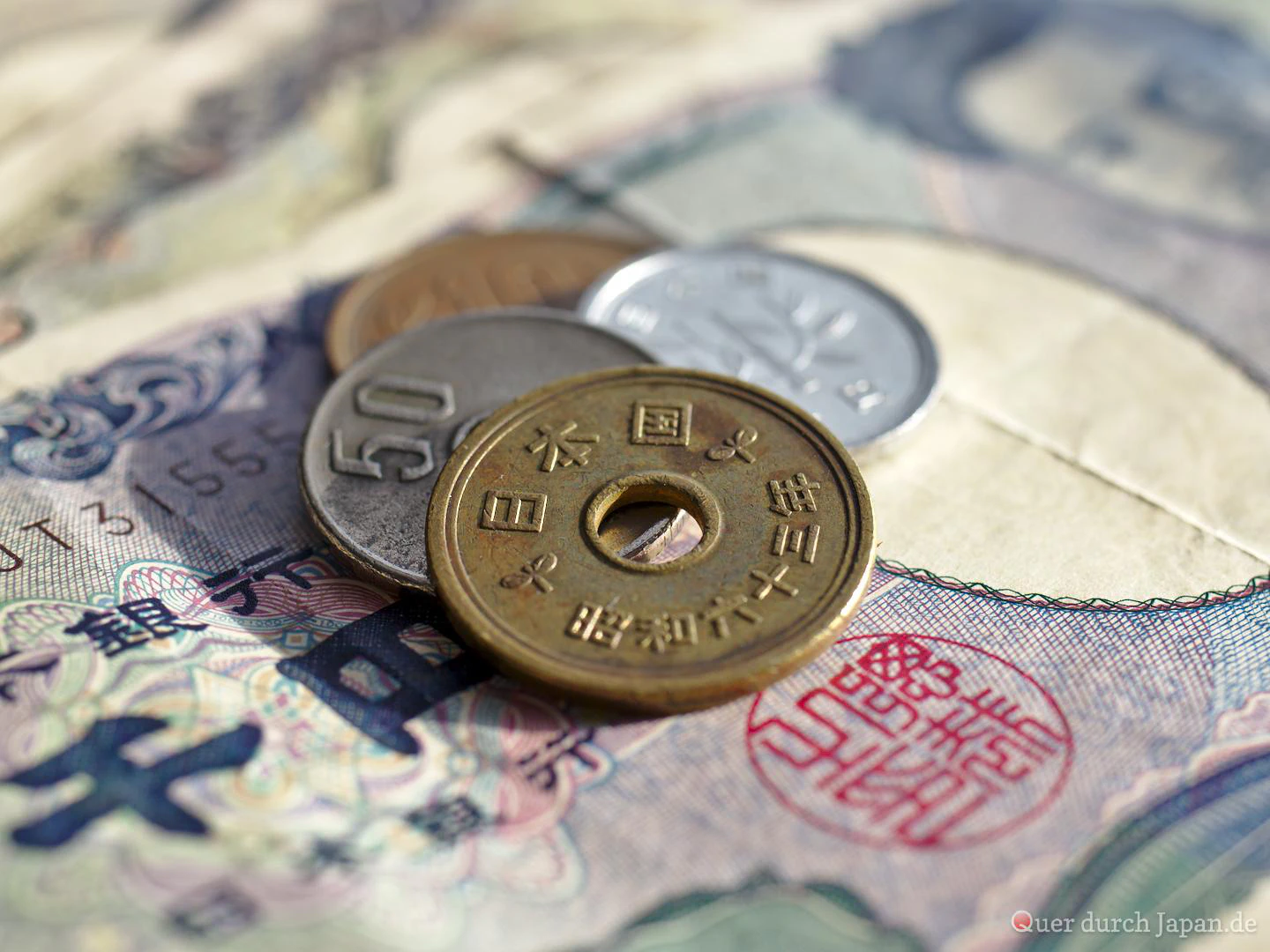
The Japanese currency is called the yen. Internationally, the symbol ¥ is used for it. In Japan, however, you’ll only find the kanji 円 (pronounced “en”), which actually means circle. There are no cent amounts; the smallest unit is 1 yen, which is roughly equivalent to our penny.

There are coins and banknotes. The smallest coin is the 1-yen coin, and the largest is the 500-yen coin. All notes and coins have their value printed in Arabic numerals. The only exception is the 5-yen coin, which is just stamped in Japanese with 五円.

The notes aren’t as easy to tell apart by colour as ours and are almost all the same size. So it’s pretty easy to mix up a 1,000 yen note with a 10,000 yen note if you aren’t paying attention.

Changing money

In my personal experience, it’s hard to buy larger amounts of yen for a trip in Germany, especially at good rates. But what’s it like in the destination country itself?

Travel guides for all over the world always warn against changing money right at the destination airport, because the exchange rate there is usually rubbish and the fees are high. This doesn’t apply to Japan. At the international airports, you’ll find bank exchange counters that change cash at a fair daily rate and without exchange fees, even for larger amounts. A quick comparison of the displayed exchange rates is still worth it, though.

A lot of hotels offer to change cash into the local currency at reception, but the rates aren’t quite as good. Some hotels even have a currency exchange machine for this purpose.

Of course, you can also change your money at a Japanese bank, but that can be a pretty time-consuming hassle, as forms have to be filled out and signed off by several staff members. There are nicer things to do on holiday than wasting your time in a bank.

In the Seven-Eleven supermarkets, which seem to be absolutely everywhere, you can withdraw money from the cash machine (“ATM”) using major credit cards. Depending on your own card’s terms and conditions, this can be the cheapest way to get your hands on cash.

Plastic money

Japan is very much a cash country. Generally, credit cards are only accepted by large department stores, hotels, and ticket machines. For everything else, you should make sure you have enough cash on you to avoid any nasty surprises.

Even though you’re usually on the safe side with Mastercard or Visa, it’s better to check before booking whether the hotel you want accepts your credit card issuer. Some hotels and car rental places also require a proper credit card and reject debit cards. If you’re relying on paying by card, you should have a real credit card with a sufficient limit to fall back on just in case.

There are loads of domestic payment systems in Japan that are inaccessible to tourists. In branches of larger chains, you can still try paying contactlessly with your own credit card, Apple Pay, or Google Pay. At the till, you should just say “Visa Touch” as the payment method, even if you have a Mastercard. You shouldn’t rely on it, though.

Tip: Before you travel, you should let your bank know in good time about your upcoming trip abroad!

Cash withdrawals by card outside Europe are blocked by some banks for security reasons and need to be unblocked for the duration of your stay. Plus, the bank will then know about your trip and won’t accidentally block the card on suspicion of fraud.

While you’re at it, you can also find out about the fees and daily limits.

Banks also often temporarily grant a higher limit on your credit card for a holiday. It’s definitely worth asking.

Prices

Prices are usually written in normal Arabic numerals, so you can easily read them as a tourist. Every now and then, however, you’ll also spot price tags with Japanese numerals. The system isn’t hard to get the hang of; a little cheat sheet helps a lot.

While over here prices always include VAT, that’s not necessarily the case in Japan. Sometimes two amounts are displayed - the price without tax (税引) and with tax (税込). The VAT rate in Japan is currently 10% (as of October 2019), with a slightly reduced rate if you take food away instead of eating in.

Tipping

It’s true: you don’t tip in Japan. Good service is taken for granted and you don’t need to pay extra for it. Tipping isn’t expected either, so you shouldn’t even try; it often just causes confusion.

Leaving the country

When leaving the country, you can change the money back into your home currency at a fair rate at the exchange counters at the airport. However, you only get notes, no coins.

Or you can just take the remaining money home with you for your next trip to Japan. 😉

The amount of cash you can bring into Japan and back home without declaring it is limited. The limit is relatively high, so even a generous holiday budget will usually not need to be declared. It’s still a good idea to check the latest regulations with the Federal Foreign Office and Customs.

Girocard

You can also withdraw money from cash machines using a Girocard (popularly known in Germany as an “EC card”) with a Maestro logo. Unfortunately, Girocards with a Maestro logo haven’t been issued since 2023, so this handy option is disappearing. Many banks are instead equipping their Girocards with another additional function that’s supposed to enable payments abroad. If in doubt, you should check with your bank to see if your Girocard can be used in Japan.

Surfen in Japan

As a tourist in a far-off country, you naturally want to stay in touch with your loved ones back home. Here are a few tips on how to get on the internet as a tourist in Japan and what you should look out for.

Which mobile phones are actually suitable?

The mobile network in Japan differs technically in parts from the one in Europe. But thanks to UMTS, LTE and 5G, practically all smartphones and mobile phones can be used. Only ancient mobiles from our D-network and E-network days won’t work at all in Japan, because there’s no GSM network there. You can safely leave these museum pieces at home.

Phone and SMS

In some countries, you can save money as a tourist by buying a SIM card locally. In Japan, however, by law, SIM cards with phone and SMS functions can only be sold to people who have a permanent residence in the country.

So for phone and SMS, you have to fall back on your own mobile tariff. Japan usually counts as the world zone, so the charges are correspondingly high. With some providers, you even pay when you get called. To avoid a nasty surprise on your mobile bill when you get back, you should check the prices with your provider before setting off.

Important: Since mobile networks of other countries can easily be shared within the EU, Roaming is turned on in many smartphones. Don’t forget to turn off this feature before entering Japan to avoid expensive surprises.

It’s much cheaper to handle communication over the internet and use common messenger or calling apps. But how do you get onto the worldwide data network?

Mobile internet

Data-only SIM cards can be sold to tourists in Japan too. There’s actually quite a big selection of data tariffs aimed at visitors. You can buy them at many electronics chains (for example Yodobashi Camera or BIC Camera) and also at vending machines in international airports. Mostly you surf on the network of NTT DoCoMo, the mobile subsidiary of the formerly state-owned phone provider NTT. The mobile network is very well developed and really fast in metropolitan areas.

With most cards, to get started you have to set up an APN on your smartphone and go through a registration procedure before you’re allowed on the internet. The steps are described in detail in English, but it requires a bit of practice using a smartphone.

A selection of tourist SIMs, without any claim to completeness, accuracy or being up-to-date (as of August 2021):

  • b-mobile offers an affordable 7 gigabytes for 21 days with their VISITOR SIM. That should be more than enough even for higher demands.
  • The IIJmio JAPAN TRAVEL SIM lasts up to 3 months and is therefore suitable for longer stays. The data volume unfortunately isn’t correspondingly high, but can be topped up.
  • So-Net offers cards that last 30 and even 60 days.

Make sure you get the right size SIM card when buying, as exchanges are generally out of the question.

Tip: A mobile hotspot can be really handy. This is a small battery-powered device that you put the visitor SIM card into. It connects to the mobile network and provides Wi-Fi access, through which other devices (smartphones, laptops, etc.) can then get on the internet. This way you can surf on the go and still be reachable by phone, because your own SIM card stays in your smartphone. Mobile hotspots are available in any well-stocked electronics shop.

Some smartphones have room for two SIM cards. Here you can use your home SIM card for phone calls and texts and set up a data connection with the tourist SIM.

Hotels

An alternative to the mobile network is WLAN, though the term Wi-Fi is more common internationally.

Many hotels offer their guests free Wi-Fi or at least wired internet access for their laptops. In our experience it usually works, but not always. If you rely on the internet during your trip, for example to organise tickets for the next day or plan routes, you should always have an alternative up your sleeve.

Free Wi-Fi

The provider SoftBank runs around 400,000 Wi-Fi hotspots in Japan. Tourists can use them for free for two weeks after registering via mobile. However, we haven’t had any personal experience with this ourselves.